

Production Challenges in the Jewellery Industry: How Leading Manufacturers Stay Ahead
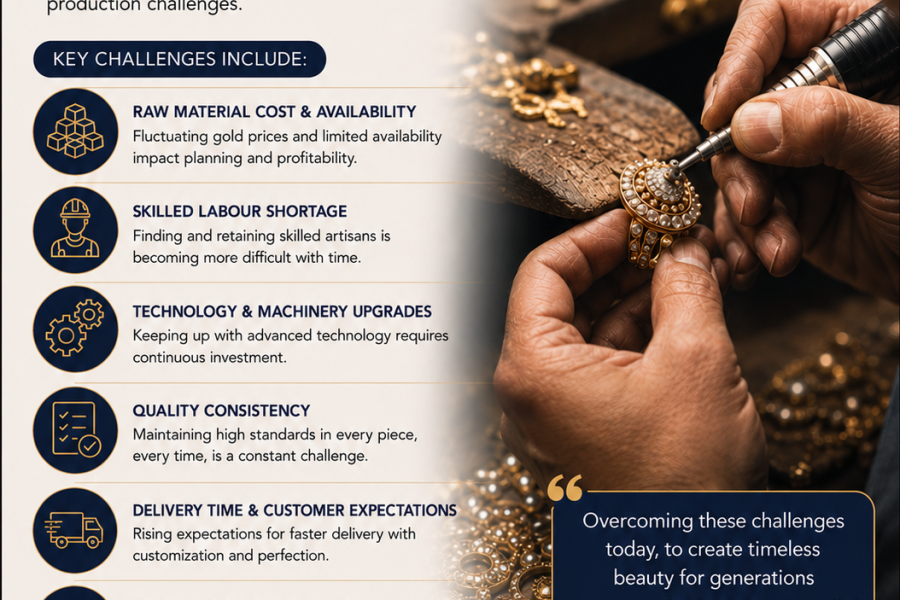
The jewellery industry is built on craftsmanship, precision, and innovation. Behind every beautifully crafted ring, necklace, bracelet, or pendant lies a complex manufacturing process that demands exceptional attention to detail.
However, jewellery production is becoming increasingly challenging. Rising precious metal prices, labor shortages, evolving customer expectations, and stringent quality standards require manufacturers to continuously improve their operations.
In this article, we explore the major production challenges in the jewellery industry and how professional manufacturers overcome them to deliver exceptional quality.
1. Fluctuating Raw Material Prices
Gold, silver, platinum, and gemstones are the foundation of jewellery manufacturing. Their prices change frequently due to global economic conditions, supply chain disruptions, and market demand.
Common Challenges
- Sudden increase in gold and silver prices
- Difficulty estimating manufacturing costs
- Reduced profit margins
- Inventory management issues
Solution
Leading jewellery manufacturers monitor market trends, optimize inventory, and use efficient production planning to reduce the impact of price fluctuations.
2. Shortage of Skilled Craftsmen
Jewellery manufacturing combines traditional craftsmanship with modern technology. Finding experienced artisans for stone setting, polishing, engraving, and finishing has become increasingly difficult.
Challenges
- Limited availability of experienced artisans
- Higher labor costs
- Longer production cycles
- Difficulty maintaining consistent craftsmanship
Solution
Manufacturers invest in employee training, continuous skill development, and advanced manufacturing technologies to improve efficiency while preserving craftsmanship.
3. Maintaining Consistent Quality
Quality is one of the most important factors in jewellery manufacturing. Even minor imperfections can affect customer satisfaction and brand reputation.
Quality Challenges
- Stone alignment
- Surface finishing
- Metal purity
- Accurate sizing
- Secure stone setting
Solution
Professional manufacturers implement multiple quality inspection stages, ensuring every piece meets strict international quality standards before shipment.
4. Technology Integration
Modern jewellery manufacturing relies heavily on digital technology.
Today’s production includes:
- CAD Jewellery Design
- CAM Programming
- 3D Printing
- CNC Milling
- Laser Welding
- Advanced Casting Systems
Challenges
- High investment costs
- Employee training
- Software upgrades
- Equipment maintenance
Solution
Companies that embrace digital manufacturing reduce production time, improve accuracy, and minimize material wastage.
5. Production Time and Delivery Deadlines
Customers now expect quicker turnaround times without compromising quality.
Common Problems
- Large order volumes
- Custom jewellery requirements
- Export deadlines
- Unexpected production delays
Solution
Efficient production planning, automated workflows, and experienced project management help manufacturers deliver orders on time.
6. Material Wastage
Precious metals are expensive, making wastage a major concern.
Sources of Wastage
- Casting defects
- Polishing loss
- Incorrect production planning
- Design modifications
Solution
Modern casting technologies, CAD optimization, and metal recovery systems significantly reduce production losses.
7. Supply Chain Disruptions
Jewellery manufacturers depend on reliable suppliers for:
- Precious metals
- Diamonds
- Gemstones
- Findings
- Packaging materials
Global disruptions can delay production and increase costs.
Solution
Building strong supplier relationships and maintaining strategic inventory levels help minimize supply chain risks.
8. Compliance with International Standards
Export-focused manufacturers must comply with various international regulations.
These include:
- Hallmarking standards
- Ethical sourcing
- Responsible manufacturing
- Export documentation
- Environmental compliance
Meeting these requirements is essential for serving global jewellery brands and retailers.
9. Rising Customer Expectations
Today’s customers demand much more than attractive jewellery.
They expect:
- Superior craftsmanship
- Sustainable sourcing
- Fast delivery
- Product customization
- Competitive pricing
- Premium packaging
Manufacturers must balance quality, speed, and affordability while maintaining profitability.
10. Sustainability and Responsible Manufacturing
Sustainability is becoming an important factor in jewellery production.
Many buyers now prefer manufacturers who:
- Reduce production waste
- Recycle precious metals
- Source gemstones responsibly
- Use environmentally friendly processes
- Follow ethical manufacturing practices
Responsible manufacturing strengthens customer trust and enhances brand reputation.
How Advanced Jewellery Manufacturers Overcome These Challenges
Leading jewellery manufacturers invest in:
- Advanced CAD/CAM technology
- Skilled artisans
- Automated production systems
- Strict quality control
- Continuous employee training
- Sustainable manufacturing practices
- Efficient supply chain management
- Customer-focused production planning
These investments enable manufacturers to consistently deliver premium-quality jewellery while meeting global market demands.
Why Choosing the Right Manufacturing Partner Matters
For retailers, wholesalers, and jewellery brands, selecting the right manufacturing partner can significantly impact business success.
A reliable jewellery manufacturer provides:
- Consistent product quality
- Competitive pricing
- Timely deliveries
- Flexible customization
- Modern manufacturing technology
- Transparent communication
- Long-term business support
Working with an experienced manufacturer reduces production risks and helps businesses grow with confidence.
Conclusion
The jewellery industry continues to evolve with changing technologies, market demands, and customer expectations. Although production challenges are inevitable, manufacturers who embrace innovation, invest in skilled craftsmanship, and prioritize quality can turn these obstacles into opportunities.
At Pukhraj Gems, we combine advanced manufacturing techniques, experienced artisans, and rigorous quality control to deliver exceptional jewellery solutions for brands, wholesalers, and retailers worldwide.
Whether you require custom designs, private-label manufacturing, or large-scale production, choosing the right manufacturing partner is the key to long-term success.
Frequently Asked Questions (FAQs)
1. What is the biggest challenge in jewellery manufacturing?
The biggest challenges include fluctuating raw material prices, maintaining quality, skilled labor shortages, and meeting tight delivery schedules.
2. How do jewellery manufacturers maintain quality?
They use multiple quality inspection stages, advanced manufacturing equipment, skilled artisans, and strict quality control procedures.
3. Why is technology important in jewellery production?
Technology such as CAD/CAM, 3D printing, CNC machining, and laser welding improves precision, reduces production time, and minimizes material wastage.
4. How do manufacturers reduce gold and silver wastage?
By using optimized CAD designs, efficient casting methods, precision machining, and precious metal recovery systems.
5. Why should businesses work with an experienced jewellery manufacturer?
Experienced manufacturers offer better quality, reliable production, customization capabilities, timely delivery, and compliance with international standards.